Articles in OET Letters: A, An, The (The #1 Language Error)
OET writing articles a, an, the: the sound-based rule for a/an, when 'the' is required, and the errors in clinical letters that cost Language marks.
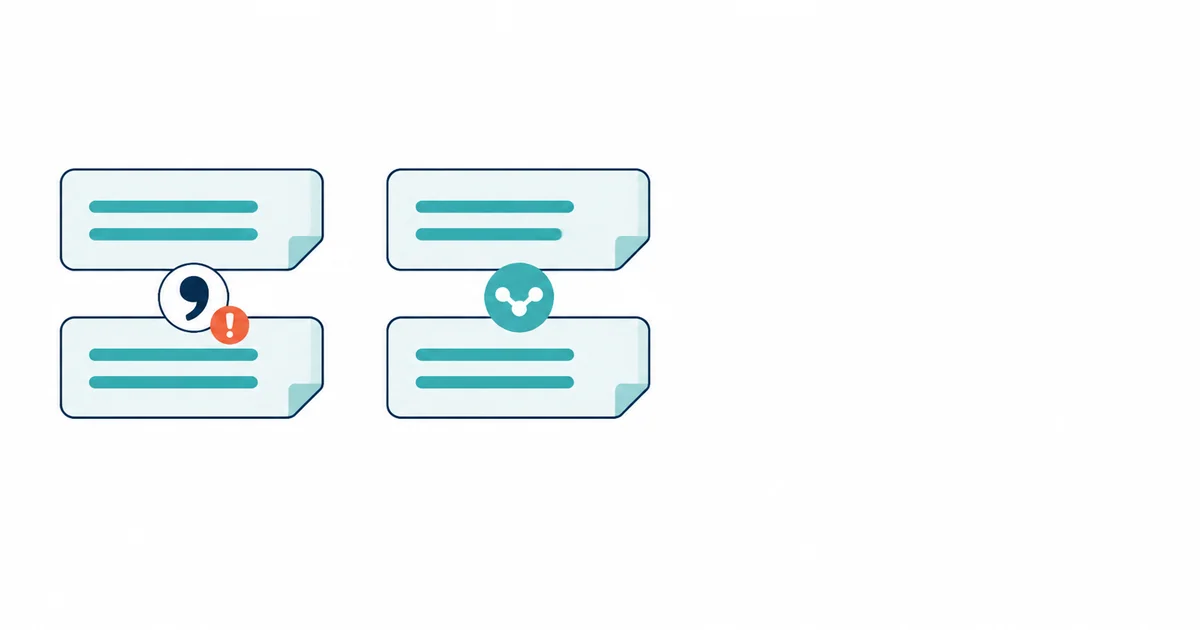
Article errors are the single most frequent Language mistake we see across the letters we correct, and they are almost invisible to the person who wrote them. That is the real problem with OET writing articles — a, an, the errors don’t break comprehension, so your own proofreading pass skates straight past them. An examiner reading against the Language criterion does not skate past them, because they show up three or four times in a single letter, not once.
In short
In OET writing, articles (a, an, the) follow three rules candidates routinely misapply. First, “a” and “an” are chosen by the sound that follows, not by spelling — “an X-ray” and “an MRI” are correct because X and M are pronounced with a leading vowel sound, while “a one-off dose” is correct despite “one” being a vowel letter, because it sounds like “w.” Second, “the” marks anyone already introduced: case notes describe “a 68-year-old man,” and every later reference must switch to “the patient” — dropping “the” on second mention is the most common article error examiners see. Third, no article at all is correct before uncountable nouns used generally (advice, information) and general plurals (medications, symptoms). Under the OET Language criterion (one of six criteria set by CBLA, which owns OET), article errors rarely fail a letter alone, but they cluster — three or four per letter is typical — and that clustering pulls a borderline Language grade down. Source: oet.com.
Watch the full breakdown: Articles in OET Letters walks through each rule with worked examples from real case notes.
Why do article errors cost so many Language marks?
Every OET letter is marked against six criteria, and Language — grammatical accuracy and range — is one of them. Articles are a small word class, but they are also one of the most frequent word classes in any clinical letter: almost every noun phrase needs a decision about a, an, the, or nothing. A 200-word letter typically contains 25–35 noun phrases requiring an article choice. Get even 10% of those wrong and you have three errors, which is enough for an examiner to register a pattern rather than a slip.
The reason this specific error type is so damaging is that it repeats. A misplaced semicolon happens once. A missing “the” in front of “patient” happens every time you refer back to the patient, which in a discharge or referral letter is constantly. One habit produces the same error five or six times across a single letter, and repetition is exactly what separates an occasional slip from a Language pattern an examiner marks down.
OET writing articles: the sound rule for a and an (not the spelling rule)
Most candidates learned “a before consonants, an before vowels” and apply it to spelling. That rule is wrong for English, and it is wrong in a way that shows up specifically in clinical vocabulary, which is full of abbreviations and acronyms.
The actual rule: a goes before a consonant sound, an goes before a vowel sound. Spelling is irrelevant.
| Phrase | Correct article | Why |
|---|---|---|
| an X-ray | an | ”X” is pronounced “ex” — starts with a vowel sound |
| an MRI | an | ”M” is pronounced “em” — starts with a vowel sound |
| an ECG | an | ”E” is pronounced “ee” — starts with a vowel sound |
| a CT scan | a | ”C” is pronounced “see” — starts with a consonant sound |
| a one-off dose | a | ”one” is pronounced “won” — starts with a consonant sound |
| an hour | an | ”hour” is pronounced without the h — starts with a vowel sound |
| a unit of blood | a | ”unit” is pronounced “yoo-nit” — starts with a consonant sound |
Notice the pattern: every acronym pronounced letter-by-letter (X-ray, MRI, ECG, MI, IV in some readings) needs the sound test applied to the letter name, not the word it stands for. “An MI” is correct because you say “em-eye,” even though “myocardial infarction” starts with a consonant sound. This is where the spelling rule fails candidates most often, because clinical writing is dense with exactly this kind of abbreviation.
When do you use “the” in a clinical letter?
“The” marks something the reader can already identify — because you named it earlier, because there is only one of it, or because the case notes make it obvious which one you mean. The pattern that matters most in OET letters is first mention indefinite, second mention definite:
“Mr Tan is a 68-year-old man who presented with acute chest pain. The patient was assessed and found to have raised troponin levels. The patient was subsequently admitted for further investigation.”
Notice “a 68-year-old man” on first mention — the reader doesn’t know who this is yet, so the indefinite article (or no article, since “Mr Tan” is a proper name) is correct. Every reference after that is “the patient,” because the reader now knows exactly who is meant. Reverting to “a patient” on the second mention is a genuine error — it tells the reader you might mean someone new.
The same logic applies beyond the patient: “the results,” “the medication,” “the ward,” “the consultant” — anything the letter has already named, or that the clinical context makes uniquely identifiable, takes “the.” A referral letter that keeps dropping “the” on these second mentions reads as though facts are simply being listed rather than connected into a coherent account, which also weakens the Organisation and Cohesion criterion at the same time.
Why do candidates drop articles entirely?
Not every language marks definiteness the way English does. Arabic has a definite article but no separate indefinite article, so the “a/an” half of the system has no direct equivalent to transfer from. Tagalog, and many Chinese and Hindi-family languages, don’t require an article system that maps onto English at all — definiteness is understood from context rather than marked with a dedicated word. If your first language works this way, an English sentence missing its article still sounds complete to you, because in your first language that same sentence would be complete without one.
This is precisely why article errors are so hard to self-edit: the missing word doesn’t create a gap you can hear. Reading “Patient was referred to cardiology” out loud doesn’t sound broken to someone whose first language doesn’t require the article — it sounds like ordinary, well-formed prose in that language transferred directly into English. An outside reader, or a native-English ear, catches it immediately, which is exactly why self-proofreading has a hard ceiling on this specific error type.
The opposite error: adding “the” where it doesn’t belong
Because omission is such a well-known problem, some candidates over-correct and start inserting “the” everywhere, including before general statements where English uses no article at all.
| Correct (no article) | Incorrect |
|---|---|
| The patient was advised to avoid alcohol. | The patient was advised to avoid the alcohol. |
| Medications should be reviewed at the next visit. | The medications should be reviewed at the next visit. |
| She reported shortness of breath on exertion. | She reported the shortness of breath on exertion. |
| He was given advice on wound care. | He was given the advice on wound care. |
The rule that governs all four: uncountable nouns (alcohol, advice, information) and plural nouns (medications, symptoms) used in a general sense take no article. “The” only returns once you’ve specified which alcohol, which medications, which advice — “the medications listed above,” “the advice given at discharge.” Without that specific anchor, “the” is wrong in the other direction, and it reads just as unnatural to an examiner as the missing article does.
A quick self-check before you submit
Run this pass specifically on articles, separate from your general proofread, because articles don’t get caught by a general read-through:
- Every noun phrase referring to the patient after the first mention — is it “the patient,” not “a patient” or bare “patient”?
- Every acronym or abbreviation preceded by a/an — say the letter name out loud (ECG = “ee-see-gee”). Does the sound at the start match a or an?
- Every general statement about medication, advice, symptoms, or alcohol — is there an article where none belongs?
- Every specific noun introduced for the first time — does it have “a” or “an,” not “the”?
This check takes under two minutes once you know the four patterns, and it targets exactly the error type that survives every other kind of proofreading. For the fuller set of grammar errors that show up alongside article mistakes, see our 8 grammar errors guide, and if you want to check your Language criterion specifically before submitting, our Language criterion breakdown explains how examiners score grammatical accuracy and range in detail.
The honest limit of self-editing
Article errors are the clearest example of a category you genuinely cannot reliably catch in your own writing, because the error doesn’t sound wrong to the ear that produced it. That isn’t a criticism of your English — it’s simply how article systems transfer (or fail to transfer) between languages. Our free OET Grammar Checker flags many article errors automatically and is a good first pass. For the ones that need a human reader who knows exactly what an OET examiner is scoring — including the article patterns that cluster silently across a whole letter — our OET writing correction service reviews your actual submission against all six criteria, article errors included.
Frequently asked questions
Common questions on this topic — full answers below.
How do you choose between a and an in OET writing?
Why do OET letters need 'the' so often?
Is it ever correct to use no article at all?
Why do article errors survive my own proofreading?
Do article errors actually lower an OET Writing score?
OET Writing Correction
Get expert OET letter feedback from Dr Mariam's team
Submit your practice letters and receive a detailed annotated PDF — assessed against all 6 OET writing criteria.
11,000+ letters corrected since 2014 · 4.9★ from 1,900+ reviews