Comma Splices and Run-On Sentences in OET Writing
"The results were abnormal, the patient was admitted" is a comma splice. Learn to spot it, fix it, and catch the run-on sentences that hide inside long clinical descriptions.
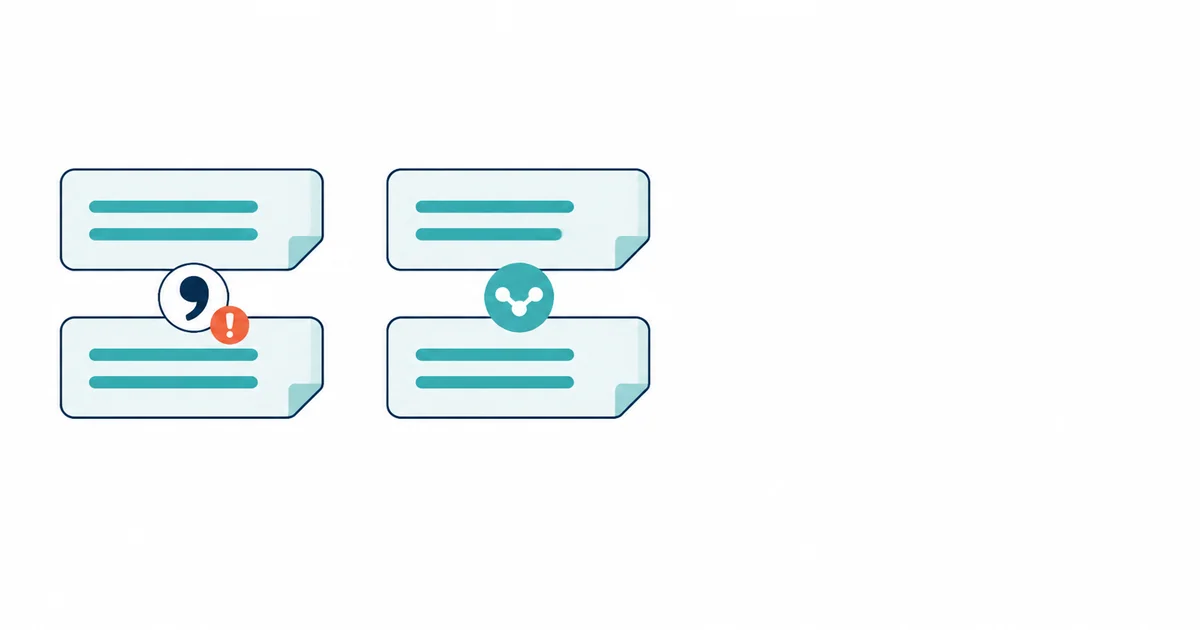
Two sentence-structure errors show up across a huge share of the letters we mark, and both come from the same root cause: writing facts down in the order the case notes gave them, without deciding how those facts actually relate to each other.
The comma splice
“The results were abnormal, the patient was admitted.” Read each half separately — both are complete sentences. A comma is not strong enough to join two complete sentences; that is the entire definition of a comma splice.
Two fixes, both correct:
| Fix | Example |
|---|---|
| Add a conjunction | ”The results were abnormal, so the patient was admitted.” |
| Use a full stop | ”The results were abnormal. The patient was admitted.” |
The conjunction fix has a real advantage: so tells the reader the two facts are cause and effect, which the bare comma never communicated. Choose the conjunction that matches the actual relationship — so for cause-effect, but for contrast, and only when the two facts are genuinely parallel.
The run-on sentence
A run-on has more than two verbs strung together with no conjunctions marking where one idea ends and the next begins. Clinically, every fact in it may be accurate — but the sentence has stopped doing its job, which is delivering facts one at a time.
The ten-second test: if a sentence has more than two verbs, count its conjunctions. None? Split the sentence at the natural break — usually where one event ends and the next begins.
Why clinical writing produces both errors
Case notes present information as a list: admission date, presenting complaint, medication, plan. Transcribing that list directly into sentence form, in the order it was given, naturally produces strings of facts with weak or missing connectors — because the case notes themselves never had to signal relationships, only record them. Your letter has to do the extra work the notes didn’t.
The check
Read your letter looking only at your commas and your verb count per sentence:
- At every comma, ask: could both sides stand alone as a sentence? If yes, the comma needs upgrading to a conjunction or a full stop.
- At every sentence with 3+ verbs, count conjunctions. None found — split it.
Both checks take seconds once you know what you’re looking for, and both protect the same criteria: Language (grammatical structure) and Conciseness & Clarity (can the reader follow it on first read).
For the full ranked list of grammar errors we see most often, see our 8 grammar errors guide. And for the sentence-connection errors a real reader catches that a checklist can’t, our OET writing correction service reviews your actual letters against all six criteria.
Frequently asked questions
Common questions on this topic — full answers below.
What is a comma splice?
How do I fix a comma splice?
What counts as a run-on sentence?
Why are these errors so common in OET letters specifically?
OET Writing Correction
Get expert OET letter feedback from Dr Mariam's team
Submit your practice letters and receive a detailed annotated PDF — assessed against all 6 OET writing criteria.
11,000+ letters corrected since 2014 · 4.9★ from 1,900+ reviews