Reading Speed for OET Case Notes: A Timed Practice Method
A timed drill to build reading speed for OET case notes without losing accuracy — practical targets, a weekly progression, and why faster reading protects your Content and Conciseness marks.
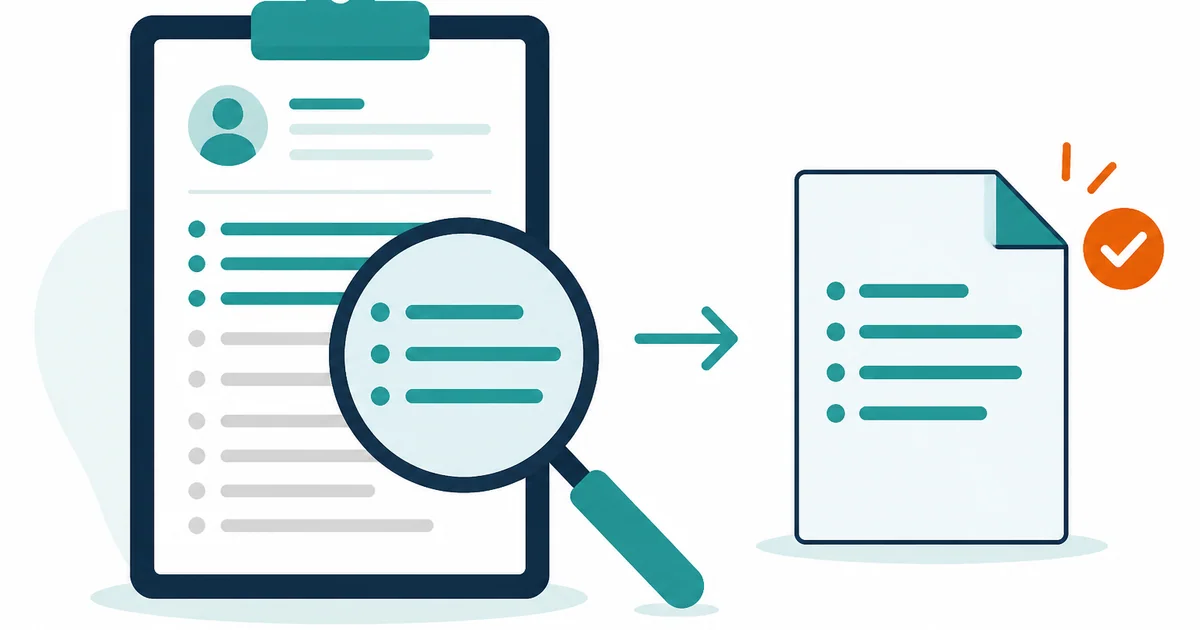
Most OET candidates train writing speed and ignore reading speed, even though the five-minute reading time and the first few minutes of writing time decide how much of the case notes actually makes it into the letter. Reading speed for OET case notes is not about rushing — it is about reaching the same level of comprehension in less time, so that planning, writing, and checking get a fair share of your 40 minutes. This guide gives a specific, timed drill for building that speed, and it is deliberately separate from the comprehension method covered in How to Read OET Case Notes.
How do you build reading speed for OET case notes?
Use a three-stage timed drill with a real case-notes sample and a stopwatch. First, read a full case-notes set once at your normal pace and record the time — this is your baseline. Second, read a different case-notes set of similar length while timing yourself, aiming to reach the same level of recall (the recipient, the purpose, and the facts that recipient needs) in 10 to 15 percent less time than your baseline. Third, check your recall against the notes: if you missed a fact the recipient needed, the attempt does not count as a pass, whatever the clock says. Repeat the drill two to three times a week, and only lower the target time after three consecutive full-recall passes at the current one. Reading speed on OET case notes is only useful if comprehension holds, because a fast read that misses a fact forces a slower, more panicked re-read later in the writing time.
Why does reading speed affect your OET Writing score?
The OET writing sub-test runs for 45 minutes: 5 minutes of reading time, during which you can read the task and case notes but cannot write or annotate, followed by 40 minutes to plan, write, and check your letter (source: oet.com). That structure is fixed and identical across professions, which means reading speed cannot buy you more total time — it only changes how the time you already have gets spent.
A slow reader usually does one of two things: finishes the 5 minutes with a shallow, incomplete picture of the case notes, or carries unfinished reading into the first few minutes of writing time. Either way, the cost lands on planning and checking. Planning is where paragraph order and content selection get decided, which is exactly what the Content, Conciseness and Clarity, and Organisation and Layout criteria are marking. A faster, equally accurate read protects that planning time instead of borrowing from it, and it protects the final check at the end, which is where most correctable Language errors are actually caught.
A worked example makes the stakes concrete. A typical nursing discharge case-notes set runs to roughly 180–220 words of dense clinical shorthand — abbreviated observations, drug names, and dates, not full sentences. An untrained reader working through that for the first time often needs 2.5 to 3 minutes to feel confident they have understood it, which leaves almost nothing of the 5-minute reading period for deciding what the recipient actually needs. A candidate who has trained the same case-notes length down to 1.5 to 2 minutes, with the same recall accuracy, walks into the 40 minutes of writing time with a clear recipient, purpose, and fact list already decided — and with 1 to 1.5 minutes still available to start planning paragraph order before the writing clock has used up any of the 40 minutes proper.
How do I measure my reading baseline accurately?
A baseline is only useful if it measures comprehension, not just the act of moving your eyes across the page. Time yourself from the moment you start reading to the moment you can say, out loud or on paper, three things without looking back at the notes: who the letter is for, why it is being written, and the three or four facts that recipient needs to act on it. That is the real end point of “reading” for OET purposes — not reaching the last line of the case notes. Stopping the clock there, rather than at the bottom of the page, gives you a baseline that actually predicts how much writing time you will have left, and it is the same end point you should use every time you re-test, so improvements are measuring the same thing.
How is this different from learning to read case notes well?
How to Read OET Case Notes teaches what to select from the notes: reading for the recipient’s required action rather than for completeness, and leaving out detail the recipient does not need. This guide teaches how fast you can do that selection reliably, once you already know how to do it. The two skills are related but not interchangeable — a candidate who selects well but slowly needs speed training; a candidate who reads quickly but selects the wrong facts needs the comprehension method first, not a stopwatch. If you are not confident in your selection method yet, start there. Speed training on top of poor selection just produces fast letters that still lose Content marks.
What does a realistic speed-training schedule look like?
Build the drill over four weeks, testing against a fresh case-notes set each session so you are not simply memorising one text.
| Week | Target time vs. baseline | Pass condition before moving on |
|---|---|---|
| 1 | Record baseline, no target yet | Three timed reads, full recall each time |
| 2 | Baseline minus 10% | Two consecutive full-recall passes |
| 3 | Baseline minus 20% | Two consecutive full-recall passes |
| 4 | Baseline minus 25–30% (treat as a floor) | Full recall under exam-day conditions |
Most candidates plateau somewhere between 20 and 30 percent faster than their starting baseline. Past that point, further gains usually come from familiarity with case-notes structure and medical vocabulary rather than from reading technique, so it is reasonable to stop chasing speed once you consistently hit your week-4 target with full recall.
How many practice case notes do I need?
Enough variety that you are training recall, not memory. The free OET case notes library has profession-specific samples across nursing, medicine, dentistry, pharmacy, physiotherapy, occupational therapy, dietetics, radiography, and speech pathology, which lets you rotate samples so each timed read is a genuine test. For the writing side of the same timed habit, the Timed Letter Practice tool runs the reading and writing stages back to back under exam conditions, which is the closest free simulation of exam-day pressure.
What mistakes slow candidates down the most?
- Re-reading the instructions out of anxiety. Read the task line once, decide the recipient and purpose, and move on. Returning to it repeatedly — a common habit under exam stress — eats minutes without adding any new information, because the instructions do not change on a second or third read.
- Reading for completeness instead of for the recipient. Trying to absorb every line of the notes before deciding what matters is slower and less accurate than reading with the recipient’s required action already in mind. Completeness is the wrong goal for a letter that is meant to be selective in the first place.
- Annotating before you have finished a first pass. Marking facts as relevant while you are still reading, before you know the full picture, often means going back to re-mark once later details change what actually matters — which costs more time than reading once and marking afterwards.
- Never practising with a timer. Candidates who only read case notes untimed in study sessions are reading under different conditions from the exam, so their real exam-day speed is untested until the exam itself, when the five-minute limit is enforced for the first time under pressure.
- Treating every case-notes set as equally hard. Dense, multi-condition case notes (several comorbidities, several medications) genuinely take longer to read accurately than a single-issue referral. Training exclusively on short, simple samples builds false confidence that will not survive a longer set on exam day.
Does faster reading change which OET criteria I score higher on?
Reading speed itself is not graded. The OET Writing sub-test is marked against six criteria set by Cambridge Boxhill Language Assessment (CBLA), which owns and administers OET: Purpose, Content, Conciseness and Clarity, Genre and Style, Organisation and Layout, and Language. None of them measures how quickly you read. But Content and Conciseness and Clarity are both decided by what you select from the case notes, and Organisation and Layout depends on the paragraph plan you build from that selection — all of that happens during and immediately after reading. For a full breakdown of how selection decisions translate into marks, see the Content criterion guide.
If your letters are accurate once you have finished planning but you are consistently running out of time before the final check, that is usually a reading-speed problem rather than a writing problem, and it is worth confirming which one you actually have. A professional OET writing feedback service that marks your letter against all six criteria can tell you whether the time pressure is showing up as missed Content, rushed Organisation, or uncorrected Language errors — which points to a different fix than simply “write faster.”
Reading speed for OET case notes rewards the same approach as every other exam skill: measure your baseline, train in small increments, and never let a faster time count if the recall behind it does not hold up.
Frequently asked questions
Common questions on this topic — full answers below.
Does OET score reading speed directly?
How much faster should I aim to read OET case notes?
How is a reading-speed drill different from learning to read case notes well?
How often should I practise OET reading speed?
Can reading too fast hurt my OET Writing score?
OET Writing Correction
Get expert OET letter feedback from Dr Mariam's team
Submit your practice letters and receive a detailed annotated PDF — assessed against all 6 OET writing criteria.
11,000+ letters corrected since 2014 · 2,000+ students in 90+ countries